
 Retrocommissioning
Loomis Laboratory of Physics
The facility features specialized laboratories, fume hoods, clean research environments, and classroom spaces that support both undergraduate instruction and graduate research programs.
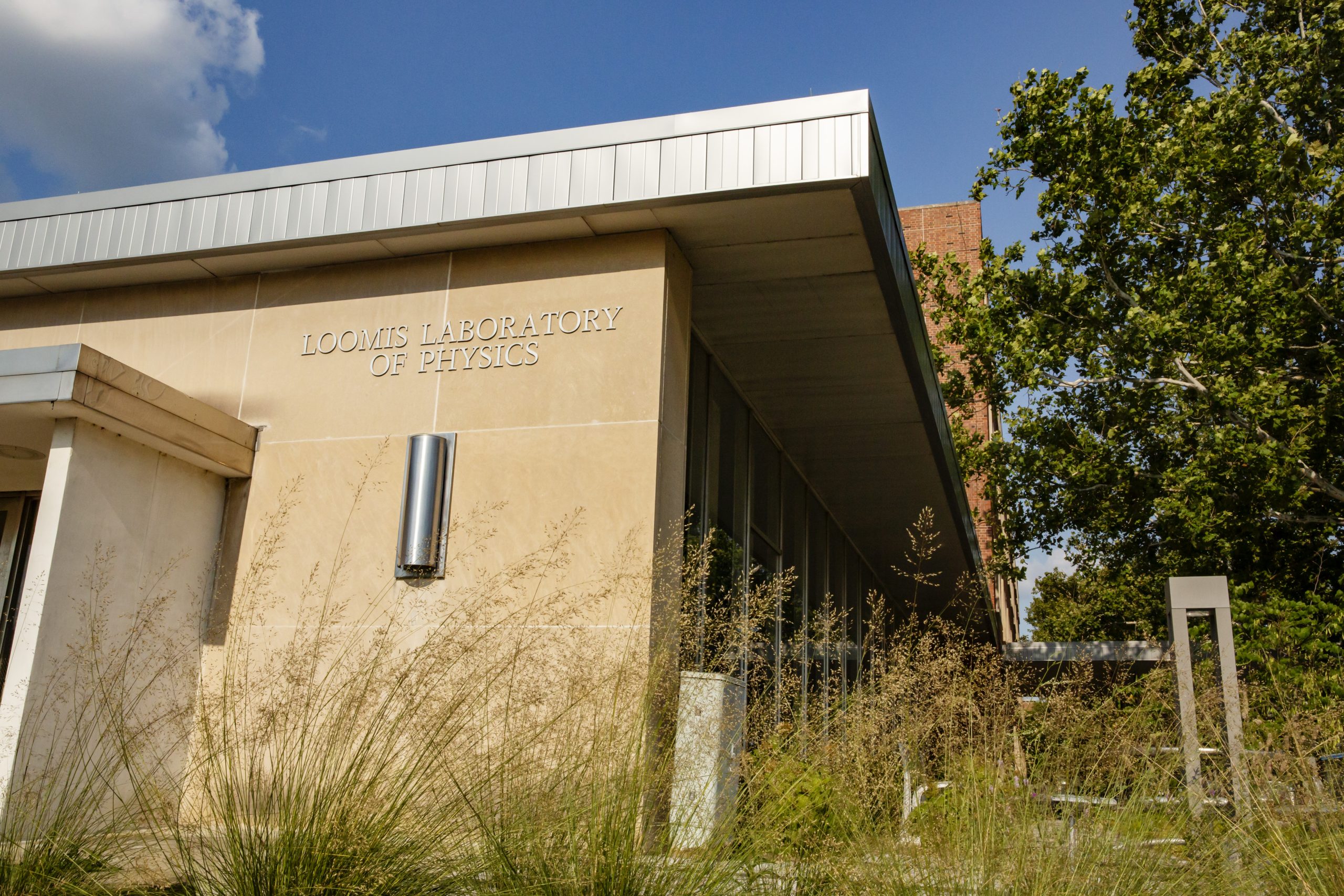
The Loomis Laboratory of Physics at the University of Illinois Urbana-Champaign is a premier research facility housing the Department of Physics. Originally constructed in the early 20th century, the building serves as a cornerstone for cutting-edge physics research and education. The facility features specialized laboratories, fume hoods, clean research environments, and classroom spaces that support both undergraduate instruction and graduate research programs. The building’s complex HVAC systems are designed to maintain precise environmental controls required for sensitive physics experiments and equipment.
The ECO project focused on optimizing the building’s complex HVAC systems that serve both research laboratories and educational spaces. A significant portion of the energy savings came from implementing occupancy based controls and optimizing airflow management. The team addressed critical issues with AHU operations, including fixing broken dampers and valves that were causing energy waste. The addition of CO2 sensors and humidity controls improved indoor air quality while reducing unnecessary conditioning. The project also resolved makeup air issues affecting the Materials Research Laboratory connection, improving overall building pressure management. The hot water system improvements included fixing differential pressure control issues and maintaining proper expansion tank pressure. Steam radiator controls were enhanced with the planned addition of automated isolation valves. Controller replacements and network communication fixes eliminated operational inefficiencies and improved system reliability.
The Loomis Laboratory building energy efficiency initiatives—including the 2018 Energy Performance Contracting (EPC) project and the 2025 ECO team project—have achieved a remarkable 44% reduction in total energy consumption compared to the FY 2015 baseline, demonstrating the effectiveness of systematic building optimization in research facilities.